As temperatures drop and Canadian roads begin to frost over, most riders know it’s time to put the bike away for the season. Proper winter storage is more than just parking the motorcycle in a garage. Done right, it protects your engine, battery, fuel system, paint, and tires from months of cold, moisture, and corrosion.
Here is the ultimate step-by-step winter storage guide for riders across Canada. Whether your bike is stored in a heated garage, an outdoor shed, or a parking space, this checklist ensures your motorcycle comes out in spring ready to ride.
1. Give Your Bike a Thorough Cleaning
Winter moisture mixed with leftover dirt or road salt can cause corrosion. Before storing, wash the motorcycle completely and dry it properly.
Focus on:
- Undercarriage
- Chain area
- Wheels and spokes
- Radiator fins
- Brake components
Once clean, apply a coat of wax to protect the paint. Lightly mist metal surfaces with a corrosion inhibitor if your storage space is unheated.
2. Change the Oil and Filter
Old oil contains contaminants and acids that can damage internal engine components over winter. Changing the oil before storage keeps the crankcase clean and prevents corrosion.
If your motorcycle shares engine oil with the transmission, this step is even more important.
3. Add Fuel Stabilizer and Fill the Tank
A full tank prevents condensation from forming inside the tank. Add a good-quality fuel stabilizer and run the engine for a few minutes so the treated fuel moves through the system.
This prevents varnish, gumming, and hard starts in spring.
4. Protect Your Battery
Canadian winters are harsh on batteries.
To avoid sulfation and premature battery failure:
- Remove the battery from the bike or disconnect the negative terminal.
- Store it in a warm, dry place.
- Attach it to a smart battery tender (not a regular charger).
- Let it maintain a gentle charge all winter.
A neglected battery is the number one cause of spring-startup problems.
5. Inflate Tires and Prevent Flat Spots
Slow air loss over months can deform tires.
- Inflate tires to the manufacturer’s recommended PSI.
- If possible, lift the bike using stands so the tires are not resting on the ground.
- If stands aren’t available, roll the bike every few weeks to avoid flat spots.
For concrete floors, place boards, mats, or carpet under the tires to prevent rubber hardening.
6. Lubricate the Chain and Moving Parts
A freshly cleaned and lubricated chain will resist rust throughout the winter.
Also lubricate:
- Cables
- Side stand
- Rear brake pedal joints
- Clutch pivot
- Foot peg hinges
This avoids seizing from moisture in unheated spaces.
7. Check Coolant and Antifreeze Levels
If your bike is liquid-cooled, ensure your coolant mixture is adequate for freezing temperatures.
Improper levels can cause cracked blocks or damaged radiators.
8. Block the Exhaust and Air Intake (Optional but Useful)
If your storage area is prone to rodents:
- Block the exhaust with steel wool or an exhaust plug
- Cover or seal the air intake
Just remember to remove any plugs before the first spring startup.
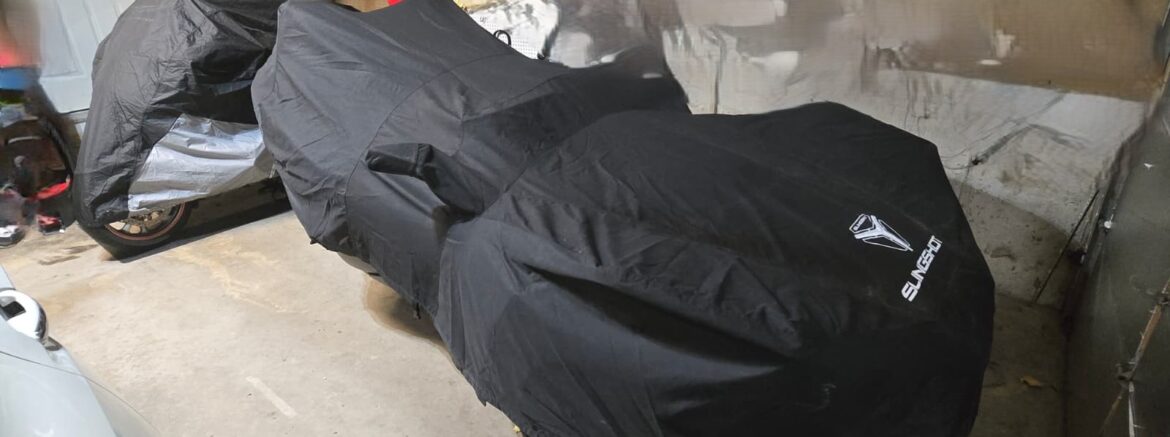
9. Use a Quality Motorcycle Cover
Choose a breathable motorcycle cover. Avoid plastic tarps because they trap moisture and cause mold, rust, and paint damage.
If storing outdoors, secure the cover with straps so it doesn’t flap in winter winds.
10. Final Step: Record Your Storage Checklist
Before you forget, write down what you’ve done:
- Oil changed
- Fuel stabilized
- Battery removed
- PSI checked
Keep this checklist on your phone or taped to the bike. In spring, it saves time and prevents mistakes.
Your Bike Will Thank You in Spring
Proper winter storage isn’t exciting, but it saves money, prevents repairs, and keeps your motorcycle ready for that first warm spring day. Canadian riders know how long our off-season can be, so protecting your bike during these months is essential.